School gardens can be rich, vibrant spaces for young people to deepen their understanding of local foods. Browse below for resources, ideas and materials that can support a school garden program.
On This Page:

- Starting Your School Garden: Download this guide to getting started on developing a plan to build and sustain a school garden. From crafting a school garden team to managing volunteers, learn best practices to set your school up for success.
- School Garden Design Activity: Are you looking for ways to involve children in the school garden design process? This resource hopes to help students and teachers generate design ideas and envision the potential of their school garden.
- School Garden Design Guide: School gardens are excellent places for students to engage with nature, observe plant growth, and make discoveries outdoors. This resource provides helpful design guidelines for your existing or proposed school garden!
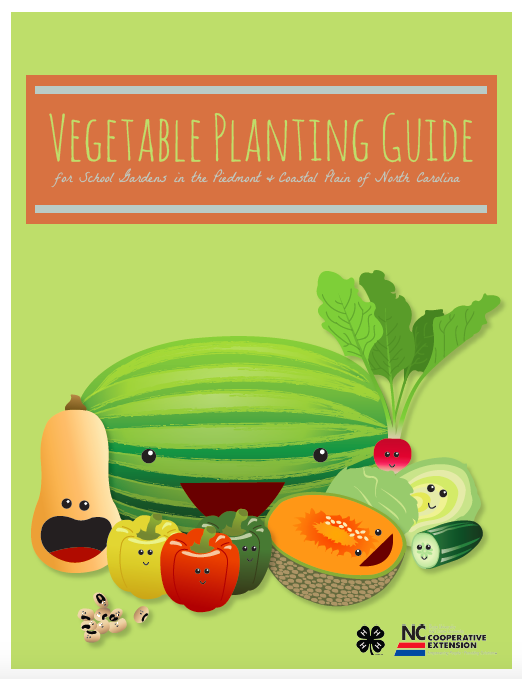
- School Garden Planting Guide - When do you plant carrots in Western North Carolina? How deep do you tuck the chard seeds into the soil? Download these fun and engaging planting guides for Eastern and Western North Carolina.
- Strawberries in Schools: An NCCES publication on growing strawberry gardens at school to provide rich spaces for students and teachers to explore concepts relevant to their curricula in a hands-on, experiential way.

- North Carolina 4-H Garden-based Curriculum: Browse this list of curriculum that is available through your local county 4-H Cooperative Extension agent. Find out who your 4-H agent is here.
- Other Garden/Farming Curriculum: Visit this list of other garden-based curricular resources from community-based organizations.
- Junior Master Gardener: An International youth gardening program created and managed by Texas A&M AgriLife Extension that engages students in hands-on group and individual learning experiences to cultivate a love of gardening and develop an appreciation for the environment.
- NC Ag in the Classroom: Through the NC Farm Bureau, Ag in the Classroom provides lesson plans that teachers can use to connect their kids to the farm and garden through science, math, literacy and social studies.
- Food, Land and People: Through the NC Division of Soil and Water, this environmental education curriculum is available to educators for free after attending one of their trainings.
- The Edible Schoolyard: A database of lessons developed from garden educators across the country.
- Life Lab: A non-profit organization from Santa Cruz, California that cultivates children's love of learning, healthy food, and nature through garden-based education.
- Garden Mosaics: Cornell University science curriculum for youth, including action projects and community food assessments.
- Plants for Human Health Institute-STEM Education: School gardens are one way that the PHHI STEM team works to fulfill their mission of equipping teachers to integrate curriculum standards in the edible classroom.

- Garden Toolkit: Are you just getting started with a school garden? Think about gathering these tools to make gardening a little easier and a lot of fun.
- Planting Methods: Should you broadcast seeds or transplant? What does this mean? Hone your horticultural skills with this quick guide on ways to plant your garden.
- Growing a Garden: What do you want to grow? This map will give kids an idea on how to get started gardening and how to care for their plants.
- Square-Foot Seeds: One student wants to plant radish, another would like to grow potatoes. This activity supports students to figure out proper plant spacing.
- Garden Maintenance Timeline: For first-time gardeners, it can be a challenge to keep up with the tasks needed to care for the garden. Use this timeline to help keep your garden growing.
- Raised Beds for the School Garden: creating a raised bed for your garden is as simple as buying and screwing together just three boards! Check out our plans here.
- Garden Harvest: Your garden has grown! This lesson focuses on how to harvest, process, and store your bountiful produce.
- Basil Seed Germination Necklace: Understand the process of germination through this activity from 4-H's Soil Solutions.
- Upcycled Plant Labels: Keep track of what and where you planted with this fun and easy activity for making plant labels.
- Recycled Rain Gauge: Knowing how much rain has fallen helps young gardeners understand the relationship between weather and garden growth. This activity gives gardeners the opportunity to build their own rain gauge.
- Afterschool Garden Club: Have you ever considered tapping into teenagers to teach an after-school garden club? Read about this successful model with Brunswick County 4-H.
- Pumpkin Lesson: Do pumpkins sink or float? How many seeds do they have? Use this grab-and-go activity to bring together math and literacy around pumpkins in the garden.
- Garden Poetry: Be inspired by a sensory experience with herbs to write poetry in the garden.
- Peer Relationships in the Garden: The garden is a special place that can teach us to care about ourselves and others. Read about how this school garden became a space for social-emotional learning and healing.